Dangling CNAME records: Hidden DNS security risks for businesses
One of the lesser-known yet increasingly relevant security risks in modern web infrastructure is dangling CNAME records. At first glance, these abandoned or poorly maintained DNS entries may seem harmless. In reality, however, they can create opportunities for attackers to carry out malicious activities through seemingly legitimate domains. But what exactly are dangling CNAME records, and why should organisations pay attention to them?
What is a CNAME record, and when does it become a dangling record?
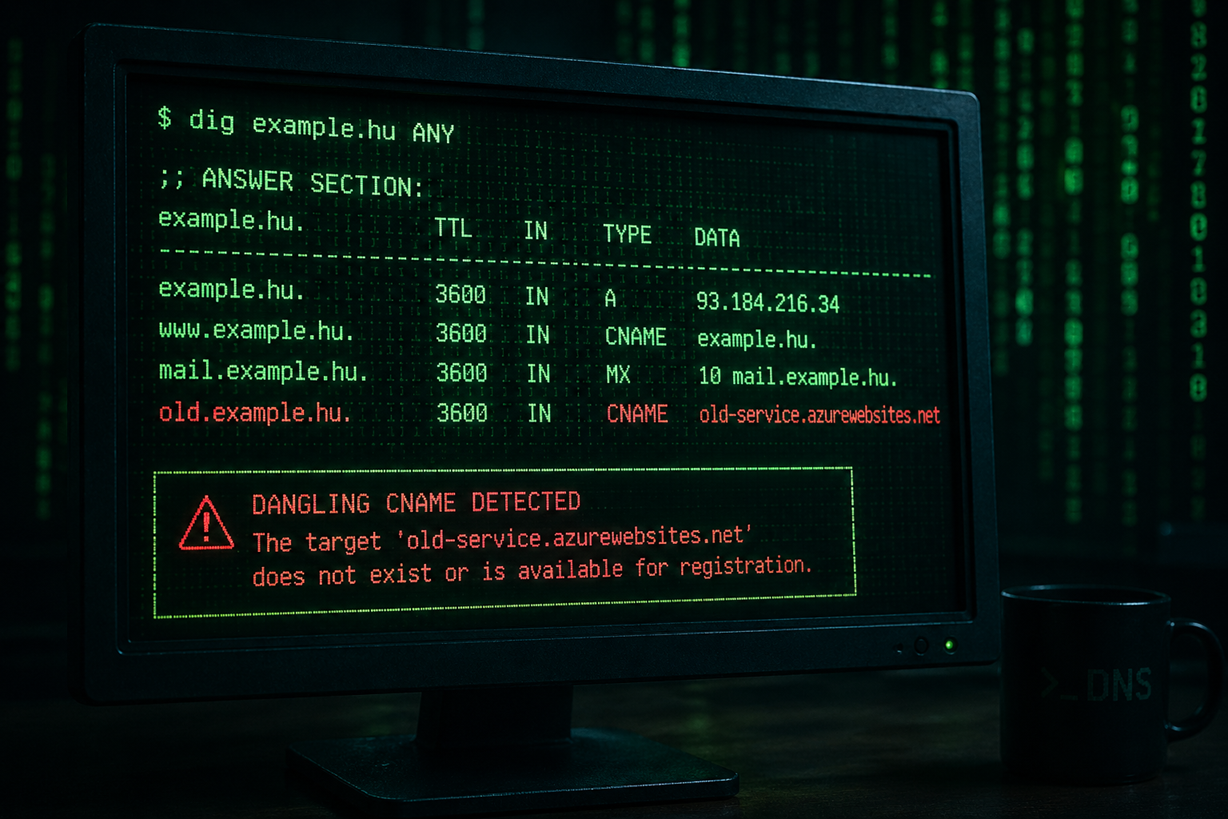
A CNAME (Canonical Name) record is a DNS entry that points one domain or subdomain to another domain. For example, a subdomain such as blog.company.eu may point to an externally hosted service managed by a cloud provider, such as example.azurewebsites.net.
The issue arises when the target resource – for example, a cloud application, storage bucket, or hosted service – is removed, but the related CNAME record remains active in the DNS configuration.
In such cases, the domain effectively becomes orphaned: the DNS record still exists, but it references a resource that no longer exists. This is a dangling CNAME record.
How do attackers exploit dangling CNAME records?
For attackers, abandoned DNS entries can represent a valuable opportunity. If an organisation deletes a cloud-based resource – such as an AWS S3 bucket or an Azure Web App – but forgets to remove the associated CNAME record, an attacker may attempt to re-register the same resource name through the cloud provider.
If successful, the CNAME record will automatically begin pointing to infrastructure controlled by the attacker. In practice, this means an attacker can take control of part of a legitimate domain without ever gaining access to the organisation’s DNS management system.
This type of attack can be used for several malicious purposes, including:
- Phishing campaigns: fake websites hosted on trusted subdomains appear more legitimate to users.
- Malware distribution: malicious files may be served from compromised subdomains.
- Session hijacking and cookie abuse: attackers may gain access to domain-scoped cookies under certain conditions.
- Brand abuse and reputational damage: misuse of a company-owned subdomain can undermine customer trust and corporate credibility.
Why are unused CNAME records dangerous?
Dangling CNAME records often remain undetected for long periods because the DNS system itself does not automatically identify them as problematic. Technically, the record remains valid even if the underlying resource no longer exists. As a result, organisations may not see any alerts or operational failures indicating an issue.
Detection is further complicated by the fact that affected subdomains are often no longer actively used or monitored. Old campaign pages, development environments, or discontinued cloud services can easily be forgotten within complex infrastructures, even as their DNS entries remain unchanged.
The risk increases because cloud providers do not always prevent previously used resource names from being registered again by another party. Once an application, bucket, or hosted service is removed, the same name may later become available for reuse. In these situations, the remaining CNAME record may automatically point to infrastructure controlled by someone else, potentially enabling abuse or even a full subdomain takeover.
This issue is particularly significant in large enterprises, where hundreds or thousands of subdomains and third-party services may coexist across distributed environments. In complex infrastructures, outdated DNS records can go unnoticed for years, continuously exposing the organisation to unnecessary security risks.
How can organisations prevent dangling CNAME exploitation?
The risks associated with dangling CNAME records can largely be mitigated through proper operational and security practices.
- Regular DNS audits
DNS zones should be reviewed periodically to ensure that every CNAME record still points to an active and legitimate resource.
- Use of specialised tools
Several security tools and open-source solutions – such as Subjack or Amass – can help identify potentially vulnerable dangling records.
- Automated infrastructure management
When using Infrastructure as Code (IaC) approaches, organisations should ensure that related DNS records are automatically removed whenever resources are decommissioned.
- Cloud-provider security controls
Some cloud providers offer protection mechanisms such as domain ownership validation. These controls should be enabled wherever possible.
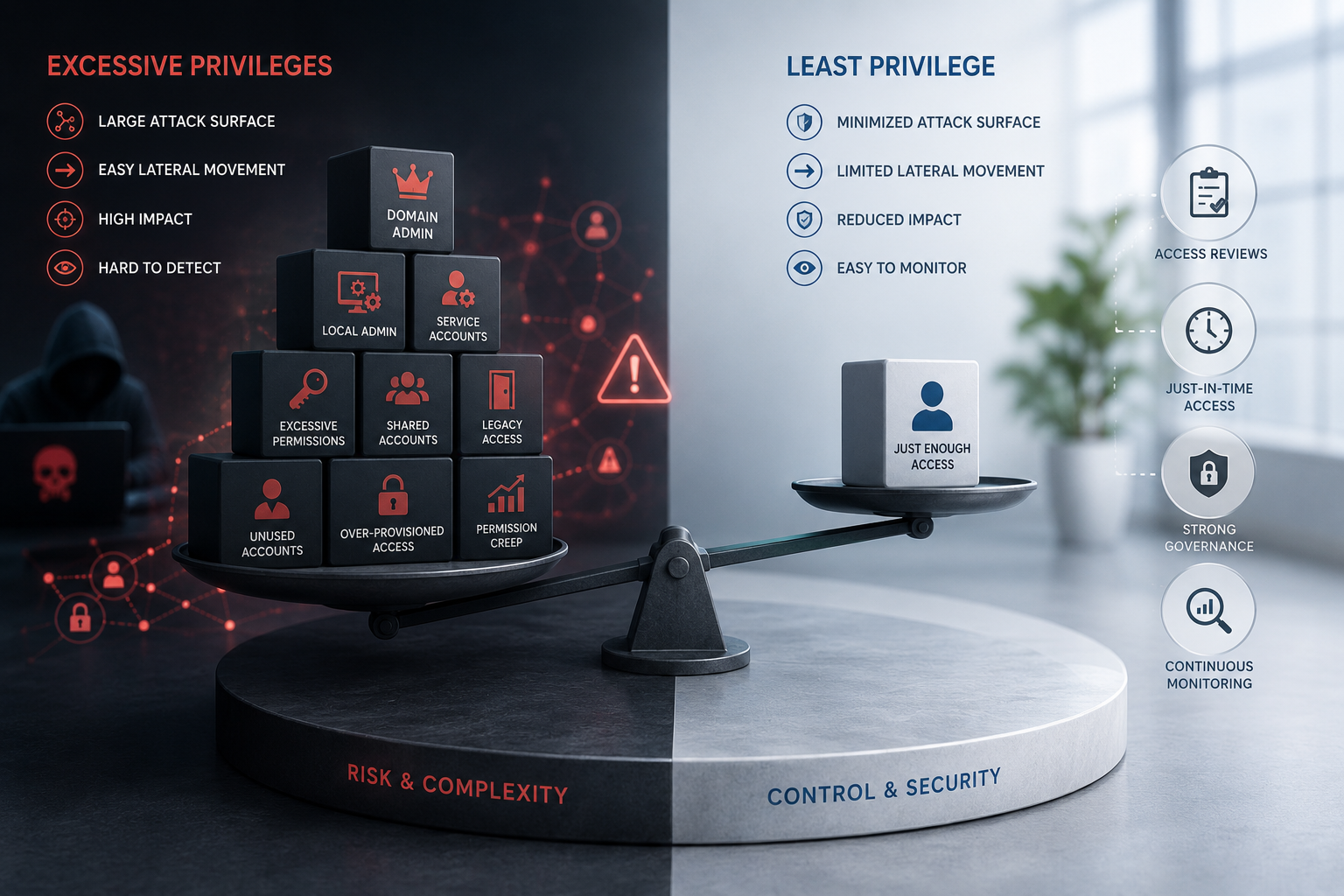
- Least privilege and domain segmentation
Access to DNS management should be limited to authorised personnel only. Separating critical and non-critical domains can also reduce potential exposure.
- Monitoring and alerting
Inactive or malfunctioning subdomains should be continuously monitored, with alerts configured for suspicious behaviour or anomalies.
Dangling CNAME records: a small oversight with serious consequences
Dangling CNAME records are a classic example of how a seemingly minor configuration oversight can evolve into a significant security exposure. While the underlying technical issue may appear straightforward, its exploitation can be highly effective for an attacker.
Prevention depends on regular maintenance, appropriate tooling, and conscious infrastructure governance. A well-maintained DNS environment not only improves operational stability but also significantly reduces an organisation’s external attack surface.
If you would like to assess whether your organisation’s infrastructure contains exploitable dangling records or other hidden external exposures, a targeted security assessment is often the best place to start. Contact us for the perfect resolution!